
1. Welcome and Introduction to the Centre
Welcome to the Language Centre of the University of Valladolid. Here you can learn Spanish in a university environment with a long academic tradition and a strong commitment to internationalisation. Our goal is for you to develop your language skills while enjoying a cultural immersion experience in Valladolid, a welcoming city full of history in the heart of Spain.
Who we are
The Language Centre of the University of Valladolid is a specialised space for teaching Spanish as a foreign language and for language training in an international university environment. With more than 65 years of experience teaching Spanish to international students, the centre combines academic tradition, pedagogical innovation and a multicultural atmosphere that encourages learning and cultural exchange.
Located on the Miguel Delibes Campus of the University of Valladolid, the centre offers Spanish programmes throughout the year and courses adapted to different student profiles, from intensive courses to specialised programmes and training for teachers of Spanish.
The courses take place in a modern, well-equipped university environment designed to facilitate language practice and the integration of students into the cultural and academic life of the city.
Mission and objectives
The mission of the Language Centre of the University of Valladolid is to offer high-quality Spanish language teaching that enables international students to develop their linguistic and communicative skills in an authentic academic and cultural context.
Through training programmes adapted to different levels and objectives — from general courses to specialised training — the centre aims to facilitate language learning and promote an immersion experience in the Spanish language and culture.
Its main objectives include supporting effective progress in language skills, encouraging cultural exchange among students from different countries, and fostering the academic and professional development of those studying Spanish at the University of Valladolid. The programmes combine language classes with cultural and academic activities that help students gain a deeper understanding of Spanish society and culture.

2. General Information
The Language Centre of the University of Valladolid is the space where the university’s language training programmes are organised. Our facilities are designed to support learning in a dynamic and multicultural environment, with equipped classrooms, digital resources and spaces that encourage interaction among students from different countries.
Centre address
The Language Centre of the University of Valladolid is located on the Miguel Delibes Campus, one of the city’s main university campuses. This campus brings together different faculties, research centres and university services in a modern setting with good connections to the centre of Valladolid.
The location of the centre provides easy access to libraries, university facilities, green areas and study spaces, creating an ideal environment for learning Spanish in a real academic context.
Language Centre – University of Valladolid
Miguel Delibes Campus
Paseo de Belén, 11
47011 Valladolid (Spain)
Contact information
The Language Centre team is available to answer any questions related to Spanish courses, the enrolment process or the organisation of academic programmes. You can contact us before your arrival, during your stay or once your course has finished.
Our administrative team offers personalised assistance to help you with any academic or practical matter related to your learning experience in Valladolid.
Email: espanol@spanishinvalladolid.com
Telephone: +34 983184670
Opening hours
The Language Centre office provides administrative assistance for students and visitors during normal working hours. During this time you can make enquiries about courses, enrolment, certificates or any aspect related to the academic programmes.
The timetable may vary slightly depending on the academic period or course start dates, so we recommend checking in advance if you need to complete any specific procedure.
CENTRE OPENING HOURS
October to May:
- Monday to Friday from 08:00 to 22:00 and Saturdays from 09:00 to 15:00.
June and September:
- Monday to Friday from 08:00 to 22:00. No Saturday service is available.
July and August:
- Monday to Friday from 08:00 to 15:00. No Saturday service is available.
STUDENT AND ADMINISTRATION OFFICE HOURS
September to June:
- Monday to Friday: 09:00 to 14:00
- Monday to Wednesday: 16:00 to 18:00
July and August:
- Monday to Friday: 09:00 to 14:00
Facilities and resources
Classes take place in modern, fully equipped classrooms on the Miguel Delibes Campus of the University of Valladolid. The spaces are designed to promote dynamic, participatory learning adapted to current language teaching methodologies.
Students have access to different academic and university resources, such as libraries, study spaces and common areas that encourage interaction with other international and university students.
The campus environment also offers extensive green areas, cafés and university services that help create a comfortable and stimulating atmosphere for learning Spanish.
Accessibility information
The Miguel Delibes Campus of the University of Valladolid has adapted infrastructure to facilitate access for people with reduced mobility and to ensure accessibility to university facilities.
Campus buildings have access ramps, lifts and appropriate signage to facilitate mobility within the facilities. If you need any type of support or specific adaptation during your stay, the Language Centre team will be available to assist you.
Our aim is to offer an inclusive environment that allows all students to participate fully in the centre’s academic and cultural activities.

3. Academic Offer
At the Language Centre you will find different Spanish courses designed to suit your goals and your language level. We offer intensive programmes, extensive courses, preparation for official certifications and courses that combine language and culture. All programmes are designed to help you make effective progress while practising Spanish in real-life situations.
Types of courses
The Language Centre of the University of Valladolid offers different Spanish programmes designed to suit the needs and goals of international students. Available options include intensive Spanish language courses, longer academic programmes and specific courses aimed at language learning in university contexts.
The courses combine the development of language skills with cultural and academic activities that allow students to practise the language in real situations and gain a deeper understanding of Spanish culture.
Course duration
Spanish programmes are offered in different formats and lengths to suit each student’s study plans. There are short courses, such as intensive programmes lasting several weeks, as well as longer academic programmes that may run for a semester or a full academic year.
This flexibility allows students to choose the option that best fits their academic, professional or personal goals.
Weekly hours
The teaching load varies depending on the type of programme chosen. In intensive courses, students usually attend several hours of class per day, which allows them to make rapid progress in language learning.
Classes are organised in a balanced way to work on all language skills: listening comprehension, speaking, reading and writing, as well as cultural aspects related to the use of Spanish.
Most classes are taught in the mornings (Monday to Thursday from 09:00 to 14:00 and Friday from 09:00 to 11:00), although this may vary depending on the course and the time of year.
Group size
Courses are organised in small groups to encourage active student participation and ensure personalised attention from the teaching staff. The maximum ratio is 14 students per group, although this number may vary depending on the level configuration.
This format encourages classroom interaction, constant language practice and the development of a dynamic atmosphere that supports collaborative learning among students from different countries.
Academic calendar
Spanish courses are organised throughout the academic year. There are different start dates for intensive programmes and longer courses, allowing students to join at different times depending on their availability.
The academic calendar includes class periods, assessments and cultural activities that complement language learning.
4. Levels and reference framework
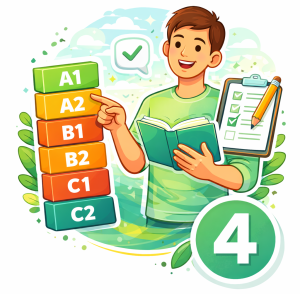
Our courses are organised according to the levels of the Common European Framework of Reference for Languages (CEFR). Before starting your course, you will take a placement test that will allow us to place you in the most suitable group so that you can make the most of your learning experience.
CEFR and levels
The Spanish courses at the Language Centre of the University of Valladolid are organised according to the levels established by the Common European Framework of Reference for Languages (CEFR), the international system used to describe and assess language learning.
This framework divides learning into different levels ranging from beginner to advanced proficiency. Thanks to this structure, students can clearly identify their progress and understand which language skills are expected at each stage of learning.
The use of the CEFR also ensures that the courses follow internationally recognised academic standards and facilitates recognition of Spanish language level in other educational or professional contexts.
Levels offered
The Language Centre offers courses for different levels of Spanish proficiency, from students who are beginning to learn the language to those who already have an advanced level.
The programmes cover beginner levels (A1, A2), intermediate levels (B1, B2) and advanced level (C1) established by the Common European Framework of Reference for Languages. This structure allows students to join the group that best matches their level of linguistic competence and to progress gradually in their command of the language.
Organisation by levels also facilitates classroom interaction among students with similar knowledge, which helps create a balanced and participatory learning environment.
Placement test
Before starting the course, students take an online placement test that makes it possible to assess their knowledge of Spanish and determine the most suitable group for their learning. This test provides an immediate indicative result and allows the teaching team to assess the most appropriate group for the student.
The aim is to ensure that each student joins a group suited to their actual level of linguistic competence. In this way, a balanced learning pace is encouraged and active participation in classroom activities is facilitated.
The test usually includes exercises related to grammar, comprehension and language use, and allows the teaching staff to guide the learning process correctly from the beginning of the course.
Change of group or level
In some cases, after the first days of class it may be necessary to adjust the initially assigned group in order to adapt it better to the student’s level. If the teaching staff consider that a student could benefit from a different group, the possibility of making a change will be assessed. The student may also request a change of group or level, as established in the current internal regulations of the Centre.
This process is always carried out with the aim of ensuring that each student participates in a group appropriate to their level and can make the most of the course.
The final decision is taken in coordination with the teaching staff and the academic coordination of the programme, taking into account the student’s progress and participation during the first sessions.

5. Methodology
Our teaching of Spanish is based on a communicative approach focused on you as a student. In class you will work on the different language skills — speaking, listening, reading and writing — through practical activities, interaction with other students and real communicative situations that will help you gain confidence using Spanish.
Communicative approach
The teaching of Spanish at the Language Centre of the University of Valladolid is based on a communicative approach that follows the principles of the Common European Framework of Reference for Languages (CEFR). The main objective is for students to be able to communicate confidently in everyday, academic and professional situations in a multicultural environment.
Classes are designed to encourage constant interaction between students and teachers, using activities that reproduce real contexts of communication. This approach makes it possible to develop not only grammatical knowledge of the language, but also the ability to use it naturally and effectively.
Language competences
In these courses, all the skills needed to achieve a solid command of the language are worked on in a balanced way: comprehension and production, both oral and written.
Beyond grammar, vocabulary and pronunciation, learning also includes sociolinguistic competence, which makes it possible to adapt language to the cultural context and appropriate norms of politeness. Pragmatic competence is also developed, which is essential for organising discourse coherently and achieving effective communication in real situations.
This comprehensive approach allows students to progressively improve their ability to function successfully in academic, social and professional settings.
Classroom dynamics
Classes combine different types of activities that encourage active student participation. These include debates, group exercises, simulations of real situations, presentations and oral interaction activities.
In this process, the teacher acts as a guide and tutor, directing learning and providing the tools needed for students to become the protagonists of their own progress. These dynamics make it possible to practise the language constantly and build confidence when communicating in Spanish. In addition, group work encourages cultural exchange among students from different countries.
The aim is to create a participatory and motivating learning environment that facilitates the gradual development of language skills under constant and personalised supervision.
Materials and resources
The teaching staff use updated teaching materials adapted to the different CEFR levels. These include specialised textbooks for teaching Spanish, as well as resources designed to reinforce the different competences, including mediation (the ability to explain or facilitate information to others).
In addition to printed materials, classes incorporate audiovisual resources, real language samples and practical activities that help contextualise language use.
The combination of different types of materials makes it possible to offer a varied learning experience adapted to each student’s communicative needs.
Digital resources
The learning of Spanish is complemented by the use of digital resources that facilitate access to materials and activities outside the classroom. These tools make it possible to reinforce the content covered in class and offer new opportunities for language practice.
Digital resources include interactive materials, multimedia content and educational platforms that help students continue their learning independently.
The integration of these tools into the teaching process contributes to creating a more flexible learning experience adapted to new forms of education.

6. Assessment
To monitor your progress, we use an assessment system that takes into account your participation in class, the activities completed during the course and different evaluation tests. This system allows us to assess your learning in a comprehensive way and support you throughout the whole process. At the end of the course, you will receive a certificate stating your level and achievement.
Assessment
Students’ progress is measured through an assessment system that takes into account the work completed throughout the course. This system considers different aspects of learning, such as class participation, completion of activities and the development of the different language skills.
Assessment is based on a set of evidence collected during the course, which makes it possible to evaluate the level of competence achieved by each student in relation to the objectives of the programme.
This process makes it possible to determine objectively the final learning outcome and certify the level of Spanish reached at the end of the course.
Tests and assignments
Throughout the course, different tests and activities are carried out to assess the student’s progress in learning Spanish. These may include written exercises, listening comprehension activities, presentations or practical tasks related to language use.
The objective of these assessments is to check the development of language competences and ensure that students are achieving the objectives established for their level.
Minimum attendance
Regular attendance in class is a fundamental element in making the most of the language learning process. For this reason, a minimum attendance percentage is established that students must meet in order to complete the course normally.
Active participation in class sessions makes it possible to develop communicative skills and benefit from the practical activities that form part of the academic programme.
Students are advised to attend classes regularly and participate actively in the activities proposed by the teaching staff.
Certificates
At the end of the course, students receive an academic certificate issued by the Language Centre of the University of Valladolid. This certificate confirms participation in the programme and the level of Spanish achieved during the course.
The document includes information about the level studied, the number of training hours and the assessment obtained during the programme.
This certificate may be useful for continuing Spanish studies, accrediting language knowledge or including the academic experience in the student’s educational record.

7. Academic regulations
To ensure the smooth running of the courses and a positive learning environment for everyone, the Language Centre has academic regulations governing aspects such as attendance, punctuality, assessment and administrative procedures related to the courses.
Attendance and punctuality
Regular class attendance is a fundamental element in making the most of the Spanish learning process. The courses are designed to progress gradually, so continuous participation in the sessions facilitates following the programme and making progress in the different language skills.
Students are advised to attend regularly and arrive on time so as not to interrupt the development of academic activities. Active participation in sessions allows them to benefit more fully from group work and the communicative dynamics that form part of the course methodology.
Attendance and participation in class may form part of the course assessment process.
Rules of coexistence
The Language Centre promotes a respectful and inclusive learning environment in which students from different countries and cultures can learn and share experiences. For this reason, it is important to maintain an attitude of respect towards the teaching staff, centre staff and other students.
During classes, students are expected to participate actively in the proposed activities and respect the basic rules of classroom coexistence. These rules help create a positive atmosphere that supports learning and collaboration among all participants.
Mutual respect and cooperation are fundamental elements for the smooth running of academic activities.
Group changes
In some cases it may be necessary to make adjustments to group organisation in order to ensure that students participate at the level most appropriate to their knowledge of Spanish. These changes are usually made during the first days of the course, when the teaching staff can assess each student’s actual level more accurately.
Any modification in group assignment is made in coordination with the teaching team and the academic coordination of the programme. Students may request this change from their teacher if they consider it necessary.
The aim of these changes is to ensure that each student can keep up with the pace of the classes and make the most of the learning process.
Cancellations and refunds
Cancellation and refund policies depend on the type of programme and the time at which the request is made. In general, it is advisable to consult the specific conditions before formalising enrolment in order to know the deadlines and established procedures.
If students need to cancel or modify their participation in a course, they should contact the administrative team of the Language Centre as soon as possible.
You can consult all the detailed information at the following link: General Conditions
Suggestions and complaints
The Language Centre of the University of Valladolid provides students with different channels to express suggestions, enquiries or complaints related to academic programmes or the services offered.
If any issue arises during the course, it is recommended to communicate it first to the teaching staff or the centre’s administrative staff in order to try to resolve the situation quickly and effectively.
The aim is to ensure a satisfactory academic experience and continuously improve the quality of the programmes offered to international students.

8. Teaching staff
The teaching staff of the Language Centre are specialists in teaching Spanish as a foreign language with experience in international contexts. We work with updated methodologies and are committed to continuous training in order to offer you dynamic, effective and high-quality teaching.
Teaching staff profile
The teaching staff of the Language Centre of the University of Valladolid are made up of professionals specialised in teaching Spanish as a foreign language. Their work combines teaching experience with a deep knowledge of the language and of language learning processes.
Teachers work in an international university environment, with students from different countries and cultural backgrounds. This diversity in the classroom enriches the learning process and encourages an intercultural approach to language teaching.
The teaching team supports students throughout the course, guiding their learning and providing academic support to progressively improve their language skills.
Training in SFL
The teaching staff have specialised training in teaching Spanish as a foreign language (SFL). This training includes specific studies in applied linguistics, language teaching methodology and teaching approaches aimed at the learning of international students.
Thanks to this preparation, teachers can adapt contents and activities to the needs of different levels and student profiles.
Training in SFL ensures that language teaching follows current academic criteria and recognised methodologies in the field of language teaching.
Teaching experience
The teachers at the Language Centre have extensive experience in teaching Spanish to international students. Throughout their careers they have worked with learners from different countries, language levels and academic contexts.
This experience enables the teaching staff to identify students’ needs and adapt learning activities in order to facilitate the development of language skills.
Knowledge of different student profiles helps create a flexible, dynamic and communication-oriented learning environment.
Continuous training
The teaching staff regularly take part in professional training and updating activities related to teaching Spanish as a foreign language.
These activities include specialised courses, academic seminars and professional meetings where experiences and new teaching methodologies are shared.
Continuous training makes it possible to maintain teaching that is up to date and adapted to students’ needs, incorporating new pedagogical tools and teaching resources.
Academic coordination
The work of the teaching staff is carried out in coordination with the academic team of the Language Centre. This coordination makes it possible to plan course contents, organise teaching activities and ensure coherence among the different levels of the programme.
Academic coordination also facilitates monitoring students’ progress and the continuous improvement of teaching programmes.
Thanks to this joint work, the Language Centre can offer structured training adapted to the learning objectives of international students.
9. Student services
During your stay you will have the support of the Language Centre team, who will be available to help you with any question related to your course or your academic experience. Our goal is for you to feel supported and to have access to the resources you need to make the most of your learning.
Administrative support
The administrative team of the Language Centre is available to help students with any issue related to Spanish courses, the enrolment process or the organisation of academic programmes.
During the course, students may go to the centre office to make enquiries, resolve doubts or receive information about different aspects of their academic stay at the University of Valladolid.
The administrative staff provide personalised assistance and guide students through the procedures necessary to manage their participation in the centre’s programmes.
Academic guidance
All teachers at the Language Centre provide academic guidance to help students understand the structure of the courses and the learning objectives of each programme.
This guidance includes information about Spanish levels, the assessment system and the development of academic activities during the course.
The aim is for students to clearly understand how the programme works and to make the most of their learning experience.
Tutorials
Students may consult the teaching staff to resolve doubts related to class content or to their progress in language learning.
Tutorials, provided especially by the language teacher in their role as tutor, make it possible to offer more personalised monitoring of learning and help identify possible difficulties in the process of acquiring Spanish.
This academic support helps students improve their language skills and progress more confidently in their learning.
Learning resources
Students have access to different resources that complement classes and facilitate Spanish learning. These resources include teaching materials, texts, practical activities and audiovisual resources used during the course.
In addition to the materials used in class, students can make use of other resources available at the university, such as libraries, study spaces and academic services.
Access to these resources helps reinforce language learning and makes it possible to continue practising Spanish outside the classroom.
Support for international students
The Language Centre regularly works with students from different countries and cultural backgrounds. For this reason, the centre team is used to guiding international students during their stay in Valladolid.
This support includes practical information about university life, the city and the services available to students.
The aim is to facilitate students’ adaptation to their new academic and cultural environment, helping them make the most of their study experience at the University of Valladolid.

10. Cultural and social activities
Learning Spanish also means discovering the culture in which it is spoken. That is why we organise cultural and social activities that will allow you to learn more about the history, gastronomy and traditions of Spain and Valladolid, while practising the language in a relaxed and participatory atmosphere.
Cultural visits
The Language Centre’s cultural activities programme includes visits to some of the most representative places in Valladolid and its historical and cultural surroundings. These visits allow students to gain a better understanding of the city’s history, heritage and cultural life.
During these activities, students have the opportunity to practise Spanish in real contexts while discovering museums, monuments, historic squares and other emblematic places.
Cultural visits are part of the learning experience and help students better understand Spanish culture and everyday life in Valladolid.
Excursions
The Language Centre organises excursions to different cities and places of cultural interest in Spain. These activities allow students to discover other historical and cultural destinations while continuing to practise the language in real-life situations.
Excursions usually include guided visits to nearby cities or to outstanding places in Spain’s cultural heritage. These experiences help broaden knowledge of the country and enrich the students’ academic experience.
In addition, excursions offer the opportunity to spend time with other international students in an informal and participatory atmosphere.
Cultural workshops
Cultural workshops are complementary activities that allow students to explore different aspects of Spanish culture in greater depth. These workshops may include topics related to gastronomy, cultural traditions, music or cinema in Spanish.
Through these activities, students can practise the language in contexts different from the classroom and discover new aspects of the country’s culture.
The workshops are designed to encourage participation and create a dynamic environment in which language learning is combined with cultural discovery.
Language exchange
Language exchange is an activity that allows international students to practise Spanish with native speakers, usually university students from the University of Valladolid.
These types of activities encourage interaction among students from different countries and facilitate language learning in an informal and communicative context.
In addition to improving language skills, language exchange makes it possible to get to know the local culture better and create new friendships during the stay in the city.
University life
Studying at the Language Centre also means being part of the university environment of the University of Valladolid. Students can take part in different cultural, academic and social activities organised by the university.
The campus offers numerous spaces for study, sport and student interaction, creating a dynamic and international university atmosphere.
Participating in university life allows students to integrate better into the academic community and enjoy a complete experience during their stay in Valladolid.

11. Practical information for international students
If you are coming to Valladolid from another country, it is normal to have questions about how to prepare for your stay. Here you will find practical information to organise your arrival and guide you through your first days in the city, including recommendations on documentation, health insurance and transport.
Before travelling
Before starting your trip to Valladolid, it is advisable to plan some important aspects of your stay in advance, such as accommodation, transport and the documentation required to enter Spain.
It is also useful to learn about the climate, the layout of the city and the services available on the university campus. Preparing these aspects in advance makes adaptation during the first days easier and allows you to start the course with greater peace of mind.
The Language Centre team can guide you on different practical matters related to your arrival and your stay in the city.
Documentation
Depending on your country of origin, you may need a visa or certain documents in order to study in Spain. It is important to consult in advance the entry requirements and procedures necessary for academic stays.
Students must make sure that their passport is valid and that they have the required documentation for their stay in the country.
If you have questions about the documents needed to participate in an academic programme at the University of Valladolid, the administrative team of the Language Centre can guide you and provide additional information.
Health insurance
During your stay in Spain, it is advisable to have health insurance that covers any possible healthcare needs. Depending on your country of origin and the type of stay, you may be able to use the public healthcare system or you may need private insurance.
International students should find out about medical coverage conditions before travelling and make sure they have adequate protection throughout their stay.
Having health insurance allows you to access healthcare services with greater peace of mind if needed.
How to get here
Valladolid has good transport connections that make access easy from different cities in Spain and Europe. The city has a high-speed train station, a bus station and road connections with other major cities in the country.
From Madrid, for example, it is possible to reach Valladolid by high-speed train in approximately one hour. This connection provides easy access to the city from the country’s main international airport.
Once in Valladolid, urban transport makes it easy to travel between the city centre and the Miguel Delibes Campus.
First steps
During your first days in the city, it is advisable to become familiar with the campus environment and the services available to students. This includes locating classrooms, libraries, cafés and other university spaces.
It is also useful to explore the centre of Valladolid and learn about the city’s main services, such as supermarkets, public transport and leisure areas.
Taking time to adapt to the new environment makes it easier to integrate into university life and allows you to start the course more comfortably.

12. Accommodation
Valladolid offers different accommodation options for international students. Depending on your preferences, you can choose between university residences, shared flats or accommodation with host families. We recommend planning in advance to find the option that best suits your stay.
Accommodation options
Students taking part in the Language Centre’s programmes can choose from different accommodation options during their stay in Valladolid. These options adapt to different preferences, needs and budgets.
The most common alternatives include university residences, accommodation with host families and renting rooms in shared flats. Each of these options offers a different experience of living together and adapting to life in the city.
Choosing the right type of accommodation can help make the academic stay more comfortable and enriching.
University residences
University residences offer student accommodation in an academic and organised environment. This type of accommodation usually includes common services such as dining facilities, study areas, social spaces and, in some cases, activities for residents.
Living in a residence makes it possible to meet other university students and take part in a dynamic and international atmosphere.
In addition, many residences are located near the university campus or are well connected by public transport.
Host family accommodation
Accommodation with a host family is one of the options most highly valued by international students, as it allows them to practise the language constantly in an everyday environment.
Living with a local family offers the opportunity to get to know Spanish culture, customs and daily life at first hand. This experience encourages integration into city life and facilitates language learning in real situations.
In addition, daily contact with native speakers helps improve fluency and comprehension in Spanish.
Shared flats
Another common option among students is to rent a room in a shared flat. This alternative offers greater independence and allows students to live with other students or young professionals.
Sharing a flat helps build new friendships and can be a good opportunity to practise the language with people of different nationalities.
In Valladolid there are different shared accommodation options located in various areas of the city.
Useful advice
Before choosing accommodation, it is advisable to find out about the location, access to public transport and distance from the university campus. These factors can influence day-to-day comfort during the course.
It is also advisable to review carefully the accommodation conditions, included services and established house rules.
Planning accommodation in advance makes arrival in the city easier and allows you to begin your academic stay with greater peace of mind.

13. Life in the city
Valladolid is a dynamic university city that is easy to get around, with a wide cultural, gastronomic and leisure offer. Living here will allow you to practise Spanish in your daily life while discovering its historical heritage, museums, squares and student atmosphere.
The city of Valladolid
Valladolid is a historic city located in north-western Spain, known for its cultural heritage, university atmosphere and quality of life. With a long academic tradition, the city offers an ideal environment for studying Spanish and experiencing Spanish culture at first hand.
Its medium size makes it easy to get around on foot or by public transport, which makes everyday life easier for students. At the same time, it offers a wide range of cultural, gastronomic and leisure opportunities.
Living in Valladolid allows students to enjoy a complete university experience in a welcoming and dynamic city.
Culture and heritage
The city has an important historical and artistic heritage that includes churches, museums, historic squares and emblematic buildings. Valladolid has been the setting for numerous historical events and preserves a rich cultural legacy.
Among the most outstanding places are museums, galleries and cultural venues that allow visitors to gain a deeper understanding of the city’s history and artistic tradition.
Valladolid’s cultural life remains active throughout the year thanks to exhibitions, festivals, concerts and cultural activities open to the public.
Leisure and free time
Valladolid offers numerous leisure and free-time options for students. The city has parks, pedestrian areas, cinemas, theatres and cultural spaces where different activities can be enjoyed.
The university atmosphere also contributes to an active social life, with events, cultural gatherings and activities organised both by the university and by different institutions in the city.
These opportunities allow students to combine language learning with an enriching cultural and social experience.
Gastronomy
Gastronomy is one of the most outstanding aspects of local culture. Valladolid is known for its culinary tradition and for the quality of its gastronomic products.
The city has a wide variety of restaurants, bars and markets where it is possible to taste traditional dishes from Spanish cuisine and from Castilian gastronomy.
Discovering local gastronomy is part of the cultural experience of living in Spain and offers an excellent opportunity to gain a better understanding of the country’s customs and traditions.
Surroundings and excursions
The location of Valladolid makes it easy to access different destinations of cultural and natural interest in the region of Castile and León. From the city it is possible to visit historic towns, natural landscapes and other emblematic places of Spanish heritage.
These excursions make it possible to broaden knowledge of the territory and discover different aspects of the region’s history and culture.
Exploring the surroundings of Valladolid is an excellent way to complement the experience of studying Spanish.
14. Rules and recommendations during the course
During your stay at the Language Centre, it is important to be aware of some basic recommendations that help classes run smoothly and support good coexistence in the university environment. In this section you will find practical guidance on how the course works, participation in class and communication with the teaching staff, so that you can make the most of your learning experience in Valladolid.
Use of Spanish in class
One of the main objectives of the Language Centre is for students to develop their ability to communicate in Spanish in real situations. For this reason, it is recommended to use Spanish regularly during classes and to participate actively in the oral and written activities proposed by the teaching staff.
Constant use of the language in the classroom encourages greater linguistic immersion and makes it possible to gain confidence progressively. Although each student may have a different level when starting the course, the important thing is to maintain an open attitude and take advantage of every opportunity to practise.
Respect and coexistence
The Language Centre brings together students from different countries and cultural backgrounds in an international university environment. For this reason, it is essential to maintain an attitude of respect towards the teaching staff, centre staff and fellow students.
Coexistence in the classroom is based on participation, listening and collaboration. Respecting speaking turns, taking care of the working atmosphere and contributing to a positive experience for everyone helps create a more dynamic and enriching learning space.
The university and the centre also encourage interaction between international students and Spanish students, which is part of the value of studying Spanish in Valladolid.
Use of devices
The classrooms of the Language Centre are equipped with technological and audiovisual resources that form part of the teaching and learning process. For this reason, devices may be used as academic support when indicated by the teaching staff.
At the same time, responsible use of mobile phones, computers and other devices is recommended during classes in order to avoid interruptions and maintain attention on course activities.
The aim is for technology to contribute to language learning and not interfere with classroom dynamics or student participation.
Communication with teaching staff
The teaching staff and the Language Centre team offer close and personalised support that facilitates direct communication with students. If you have questions about course content, your progress or any aspect related to classes, it is advisable to discuss them with your teacher or with the academic team.
Asking questions, requesting guidance and communicating any difficulty in time can help you make better use of the course and progress more confidently in your learning.
Open communication with the teaching staff is part of the centre’s approach and contributes to creating a more effective and satisfying academic experience.
Making the most of the course
To get the most out of your experience in Valladolid, it is advisable to attend class regularly, take part in the first-day orientation session and also make the most of the cultural activities, visits and excursions organised by the centre. Attendance is important not only to follow the course properly, but also to obtain the corresponding certificates, since there is a required minimum number of hours.
In addition to classes, contact with other students and participation in complementary activities facilitate immersion in the Spanish language and culture. Practising Spanish outside the classroom and taking part in university life will make your experience much more complete.

15. Contact and support
If you need more information or have any questions, the Language Centre team will be happy to help. You can contact us through the usual channels and we will guide you with anything you need before, during or after your course.
Address
The Language Centre of the University of Valladolid is located on the Miguel Delibes Campus, one of the city’s main university spaces. The campus brings together different faculties, libraries and university services in a modern environment with good connections to the centre of Valladolid.
Language Centre – University of Valladolid
Miguel Delibes Campus
Paseo de Belén, 11
47011 Valladolid (Spain)
Telephone
If you need to resolve any questions or make a quick enquiry, you can contact the Language Centre team by telephone. The centre staff will be available to help you with any issue related to Spanish courses, the registration process or the organisation of the programme.
Telephone: +34 983 184 407
You can also contact the Language Centre by email. This option is especially useful if you need to request detailed information about courses, accommodation or any aspect related to your stay in Valladolid.
Email: info@spanishinvalladolid.com
Social media
The Language Centre shares information, news and activities through its social media channels. Following these channels can help you stay up to date with cultural events, student activities and news related to the courses.
Social media also make it possible to get to know the life of the centre better and learn about the experiences of other international students.